How early a cancer is found still matters more than almost anything else. Across many common cancers, close to 90% of people diagnosed at stage I are alive five years later. At stage IV, it is about 15%.
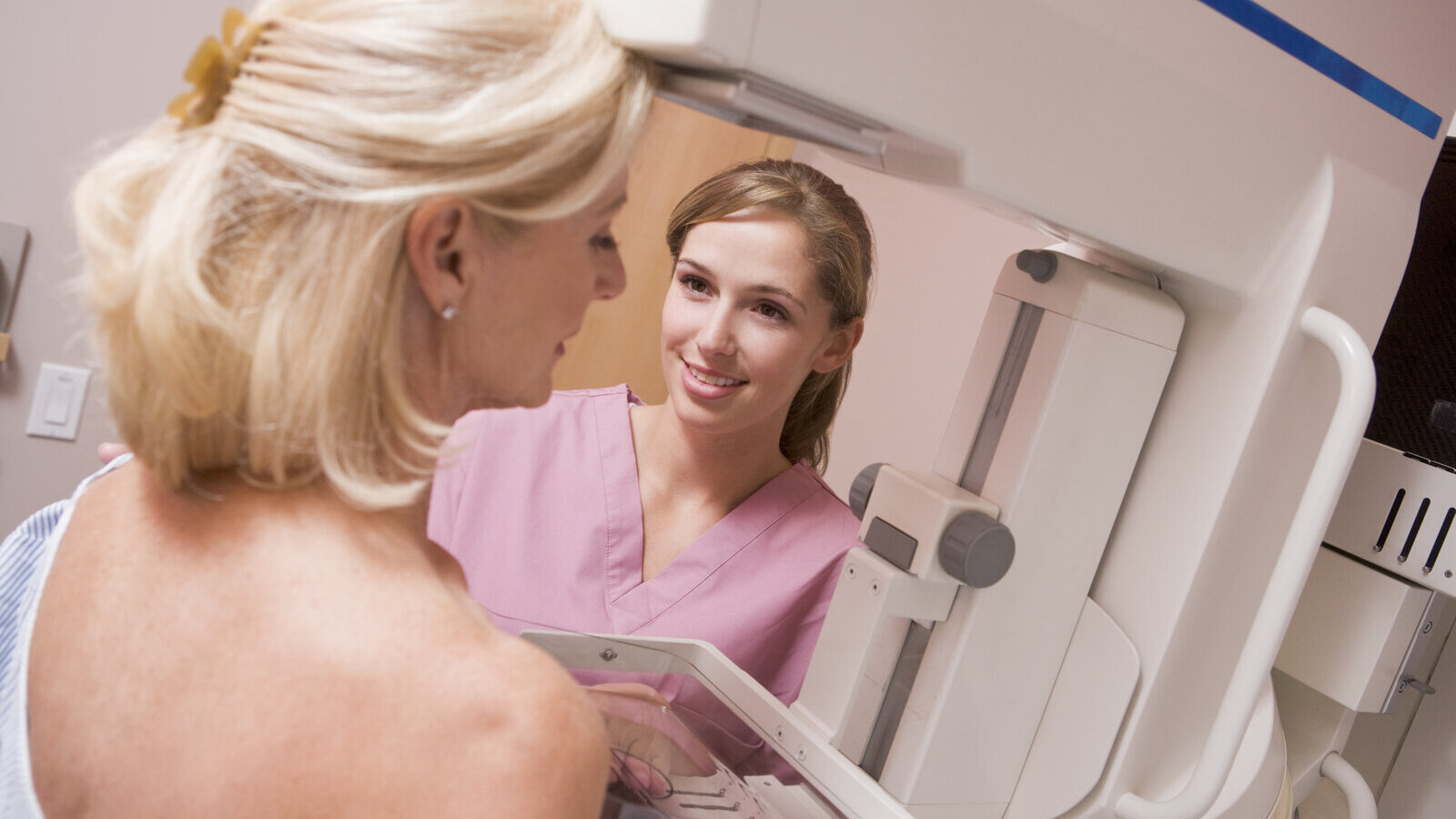
Yet in the US, only about 13% of cancers, roughly 1 in 8, are found through recommended screening such as mammograms or colonoscopy. Between 20% and 50% of cancers first show up at an emergency department visit.
Those numbers open a lecture by Timothy Rebbeck, a cancer researcher at Harvard’s school of public health and the Dana-Farber Cancer Institute. The Lancet published a written version on September 18, 2026, the day he gave the talk [1]. In it, he lays out his framework for what he calls precision prevention and early detection, or PPED. It is one expert’s proposal, built on published research. It is not a new study or a trial.
In my view, whether a cancer is caught early should not depend on luck, and matching screening to each person’s risk is a sensible way to reduce that. However, I think it only works if doctors are as willing to do fewer tests for people at low risk as they are to add tests for people at high risk.
Are most cancers still found the hard way?
The emergency figure comes from a 2022 study that Rebbeck cites. McPhail and colleagues studied 857,068 patients with eight types of cancer, including lung, colon, pancreatic and ovarian cancer [2]. The patients lived in 14 regions of six high-income countries: Australia, Canada, Denmark, New Zealand, Norway and the UK. They were diagnosed between 2012 and 2017.
The researchers counted a diagnosis as an emergency case if it came within 30 days after an emergency admission to the hospital. A visit to the emergency room alone was not enough. The person had to be admitted.
Depending on the region, 24.0% to 42.5% of these cancers were found that way. That is roughly one in four to two in five cases. For pancreatic cancer, the average was 46.1%, close to half.
In every region and for every cancer type, people found as emergencies were more likely to die within 12 months. In England, for example, 75.5% of emergency cases had died within a year, compared with 38.8% of other patients. The link was weaker, but still strong, after the researchers took the cancer’s stage into account.
This was an observational study. That means the researchers watched what happened but did not change anything. So it cannot prove that being diagnosed after an emergency admission caused those deaths. Emergency cases were consistently more common in older people and in cancers found at a later stage. The authors also note that some emergencies come from fast-growing cancers and may not be preventable.
Imagine a 70-year-old man who has felt tired for months and puts it down to age. One night severe pain sends him to the emergency room. A scan there shows a cancer that has already spread.
Other research points the same way. A 2022 review noted that about half of cancers are already at an advanced stage when they are found [3].
What does Rebbeck propose?
Today, most screening is set mainly by age. Rebbeck suggests four questions instead. The first is who is at higher risk of cancer. The second is what step fits that person’s risk, weighing harms against benefits and the person’s own values. The third is when it should happen, and how intensely. The fourth is how and where the care should be given.
He stresses that PPED is a process, not a single test. He breaks it into six steps: assessing risk, giving results, explaining the risk, making a decision, coordinating care, and following up over time. Each step depends on the one before. Today, he notes, these steps are split between primary care, screening programs and specialists. So he suggests a new kind of clinician, which he calls a cancer preventionist, to be in charge of all six. This person could be a medical doctor, someone with a PhD, a nurse, or someone with a master’s degree.
Why does risk change the math?
Rebbeck’s clearest example is tamoxifen, a pill that can lower the risk of breast cancer. In trials, women who took it had 38% fewer breast cancers over 10 years than women who did not. But take an average 50-year-old woman whose chance of breast cancer over 10 years is about 2%, or 2 in 100. For her, the drug lowers that chance by only about 0.75%, less than 1 in 100.
He puts it another way. Among the higher-risk women in the trials, 42 had to take the drug to prevent one breast cancer over 10 years. In an average-risk population, about 130 women would need to take it.
The same drug, with the same possible harms, does far more good in the higher-risk group. This is the main reason to match care to each person’s risk. Rebbeck notes that families with inherited cancer syndromes (gene changes passed down that greatly raise cancer risk) show it works “when cancer risk is sufficiently enriched”. In other words, the approach has worked where risk is high. That does not show it will work for everyone.
Why is doing less so hard?
Rebbeck writes: “De-escalation of preventive interventions in low-risk individuals is as important as preventive care escalation in high-risk individuals.” In plain words, cutting back care for low-risk people matters as much as adding care for high-risk people. People at below-average risk might wait longer between tests, or stop some altogether.
I think that is the most important sentence in the lecture. Precision medicine means care that is fitted to each person. It is usually presented as doing more for patients. Here, the plan also includes doing less, on purpose, for people who gain little from being tested.
Rebbeck is frank that this is the harder direction. Telling someone they need less than the usual care takes strong evidence, clinical confidence and clear talk about risk. He writes that current knowledge rarely supports that. He also asks how to cut back without doctors sticking to old habits, without upsetting patients, and without fear of lawsuits.
This topic is close to my own training. My doctoral research was on the early detection of colorectal cancer, and I now work on AI for breast cancer imaging. From that work, I think finding something earlier helps only if doctors can tell which findings need treatment.
Is finding cancer early always better?
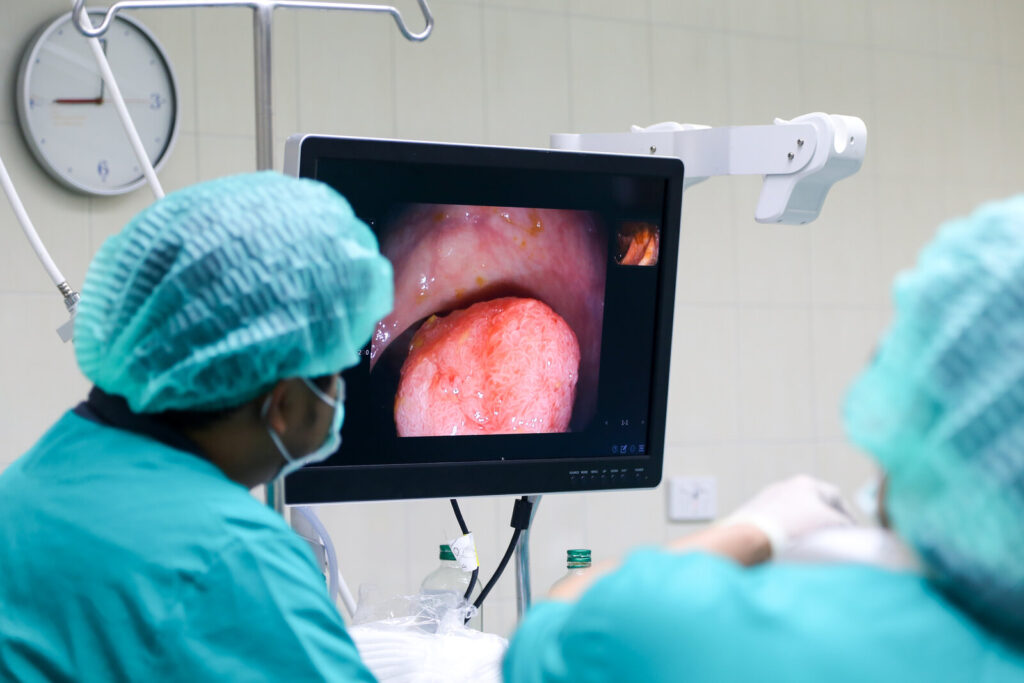
Screening for colorectal and cervical cancer has been shown to reduce deaths from those cancers [4]. This is mostly because doctors can remove growths that have not yet turned into cancer.
Screening also has real costs. One is overdiagnosis. This means finding a disease that would never have caused symptoms or death during a person’s life. One review listed estimates from earlier research. About 25% of breast cancers found by mammograms may be overdiagnosed, about 1 in 4. For prostate cancers found by PSA blood tests, the estimate was 50% to 60%.
People who are overdiagnosed can face treatment they never needed, and the stress of a cancer diagnosis. A false positive is a different problem. It is a positive test result in someone who does not have cancer at all.
There is also a less obvious problem. Suppose a test finds a cancer two years earlier, but the person dies on the same day they would have anyway. Their survival after diagnosis looks two years longer, even though nothing changed. Researchers call this lead-time bias.
Rebbeck lists eight open questions. One is whether more intense screening actually lowers cancer deaths, or only moves the date of diagnosis earlier. For breast and prostate cancer, screening brought a jump in early-stage cases. But a clear link to fewer cancer deaths has been harder to show.
Who could be left out?
The strongest worry about risk-based screening is fairness, and Rebbeck raises it directly. He warns that if PPED is not put in place carefully, it is likely to create or widen health gaps. Risk scores estimate a person’s chance of getting cancer. The genetic data behind most of these scores come mainly from people of European ancestry. Using those scores for people of African, Asian or Latin American ancestry gives unreliable estimates and wrong clinical decisions, he writes.
He also notes that new clinical tools usually lead to health gaps. Genetic tests and early detection tools tend to reach wealthy, educated people. “Without deliberate actions, PPED will become a tool of those who are already advantaged,” he writes. He says programs should be built to be fair from the start, instead of being fixed later.
Why should we still be careful?
His open questions also include what level of risk should trigger action, and who gets to decide. Another is whether health systems will pay for prevention whose benefits may arrive decades later. He also admits that extra steps, costs and referrals make preventive care more complicated. Still, he argues that doctors and researchers can begin this work before every question is answered.
At the end of the lecture, he writes that the challenge of the next decade “is not to build another test, but to build the discipline that uses them”. I read that as an honest admission that the health systems needed to run this plan are not ready yet.
Catching cancer early should not depend on luck, and matching screening to risk is a fair way to reduce that luck. But I would judge any risk-based program by two things. First, it should lower deaths, not just find more cancers. Second, it should work as well for everyone as it does for the people easiest to reach.
Crosby and colleagues wrote in 2022 that it is vital to understand who is at greatest risk of cancer. They added that we also need to find the early disease that truly needs treatment. Until we can do both, every new screening plan should be judged by the outcome that matters most: fewer people dying of cancer.
What does this mean for you?
For readers, the basics still apply. Know your family history, and keep up with the screening your doctor suggests for your age. Do not ignore symptoms that last for weeks.
When you are offered a new test, it is fair to ask three questions. What can it find? What happens if the result is positive? Has it been shown to prevent deaths?
Bottom line
Screening by age alone misses many cancers, and matching care to risk could help. In my view, Rebbeck’s most useful point is that doing less for low-risk people deserves the same weight as doing more for high-risk people.
But this is one expert’s framework, not proof that it works. The key question is whether risk-based programs lower cancer deaths. They also need to work as well for everyone as for the people easiest to reach.
References
[1] T. R. Rebbeck, “Precision prevention and early detection: framework for a new clinical cancer control pathway,” The Lancet, Lecture, published online Sep. 18, 2026, doi: 10.1016/S0140-6736(26)01669-7.
[2] S. McPhail, R. Swann, S. A. Johnson, M. E. Barclay, H. Abd Elkader, R. Alvi, et al., “Risk factors and prognostic implications of diagnosis of cancer within 30 days after an emergency hospital admission (emergency presentation): an International Cancer Benchmarking Partnership (ICBP) population-based study,” The Lancet Oncology, vol. 23, no. 5, pp. 587-600, May 2022, doi: 10.1016/S1470-2045(22)00127-9.
[3] D. Crosby, S. Bhatia, K. M. Brindle, L. M. Coussens, C. Dive, M. Emberton, et al., “Early detection of cancer,” Science, vol. 375, no. 6586, Art. no. eaay9040, Mar. 2022, doi: 10.1126/science.aay9040.
[4] S. Srivastava, E. J. Koay, A. D. Borowsky, A. M. De Marzo, S. Ghosh, P. D. Wagner, et al., “Cancer overdiagnosis: a biological challenge and clinical dilemma,” Nature Reviews Cancer, vol. 19, no. 6, pp. 349-358, Jun. 2019, doi: 10.1038/s41568-019-0142-8.
Related Articles