
On 11 March 2025, Cold Spring Harbor Laboratory (CSHL) announced that bioRxiv and medRxiv, two free preprint servers it had developed, would now operate under openRxiv, a newly launched independent nonprofit. A preprint is an early version of a scientific paper that researchers post online before formal peer review, as openRxiv explains in its own launch announcement. bioRxiv, for the life sciences, started in 2013, and medRxiv, for health research, followed in 2019. Together they now post thousands of studies each month.
It sounds like an administrative reshuffle. I think it is more. When a tool becomes something a whole field relies on every day, the question of who keeps it running, who pays for it, and what happens to its contents if it ever stops, deserves the same attention we give to roads or power lines. My view is that preprint servers have become that kind of infrastructure, and openRxiv is a good step, as long as we stay clear about what a preprint is and what it is not.
What changed in March 2025
bioRxiv and medRxiv began as projects supported by CSHL together with partner institutions. The new arrangement moves them into a separate nonprofit whose stated purpose is the long-term sustainability of the two servers. CSHL’s president, Bruce Stillman, described the servers as “naturally evolving to become independent of CSHL” and said he would join openRxiv’s directors and work with the servers’ co-founders, John Inglis and Richard Sever.
openRxiv says it is not tied to a single lab or institution, and that a governance board of scientists, researchers and technical experts guides its decisions. On money, it is open about where it started: philanthropic support, including “major early funding from the Chan Zuckerberg Initiative (CZI),” with the aim of welcoming diverse funders so it stays independent of any single one.
A service many scientists treat as permanent now has its own board, its own budget and its own survival to plan for.
How much science already leans on preprints
Fraser and colleagues, writing in PLOS Biology in 2021, found that within 10 months of the first confirmed COVID-19 case, more than 125,000 COVID-19 articles had been released, and more than 30,000 of them sat on preprint servers [1]. Looking closely at bioRxiv and medRxiv, they found COVID-19 preprints were accessed, cited and shared more than other preprints, and that journalists and policymakers were using preprints in new ways [1].
Of the COVID-19 preprints posted to bioRxiv and medRxiv between January and October 2020, 28.7% were featured in at least one news article, compared with 1.0% of other preprints [1]. In a set of 81 COVID-19 policy documents from Europe’s disease-control agency (ECDC), the UK Parliament’s science office and World Health Organization briefs, 52 cited at least one preprint, though usually as a small share of their references [1]. The authors write of “the indispensable role that preprints, and preprint servers, are playing during a global pandemic” [1].
Speed is a big part of the appeal. The same paper notes that bioRxiv and medRxiv screened submissions in roughly 1 to 3 days, while earlier studies it cites put the median gap between posting a preprint and journal publication at about six months [1].
A preprint is not a verdict
Being available is not the same as being checked. A preprint is, in Fraser and colleagues’ words, a manuscript that has “not yet been certified by peer review” [1]. Many do go on to journals, and the paper cites earlier work estimating that about two-thirds of life science preprints are eventually published [1]. The other third, and every preprint before its review, deserves to be read as a claim, not a finding.
The servers knew this. From mid-March 2020, bioRxiv and medRxiv added a banner explaining that preprints should not be treated as conclusive or reported in the news as established information [1]. COVID-19 preprints still received unprecedented coverage on online media platforms [1]. The authors also wrote that quality concerns would persist while most of those preprints were unpublished, while adding that poor-quality science is not unique to preprints [1].
Imagine a headline that says a cheap pill cuts hospital stays in half. The small print says the result is a preprint posted two days ago, with 40 patients and no outside review yet. By the time other scientists find the flaw, the headline has been shared a million times and the correction reaches almost no one.
That is the strongest case against my argument, and I accept most of it. Preprints spread errors as quickly as they spread good results, and labels only help if people read them. Good infrastructure should include clear, prominent labels, easy links to the later peer-reviewed version, and visible notices when a preprint is withdrawn. Stable stewardship makes those features more likely, because someone is accountable for them.
Independence has its own risks
The second fair objection is about money. Moving out of a large institution trades one kind of security for another. openRxiv says it began with philanthropic funding, with CZI as a major early funder. Philanthropy is generous, but priorities change, and a young nonprofit leaning on one or two funders is exposed in a way a service inside a large lab’s budget may not have been. openRxiv says it wants diverse funding for exactly this reason, and I think that goal should be treated as a promise to be tracked, not a detail.
Servers can also simply stop. PeerJ Preprints, which launched in April 2013, stopped accepting new preprints at the end of September 2019 so PeerJ could focus on its peer-reviewed journals. It planned the ending well: PeerJ said its preprints, more than 5,000 by then, would stay readable online and were already archived at Portico, a community-supported digital archive. That is a useful benchmark for every server, including the big ones.
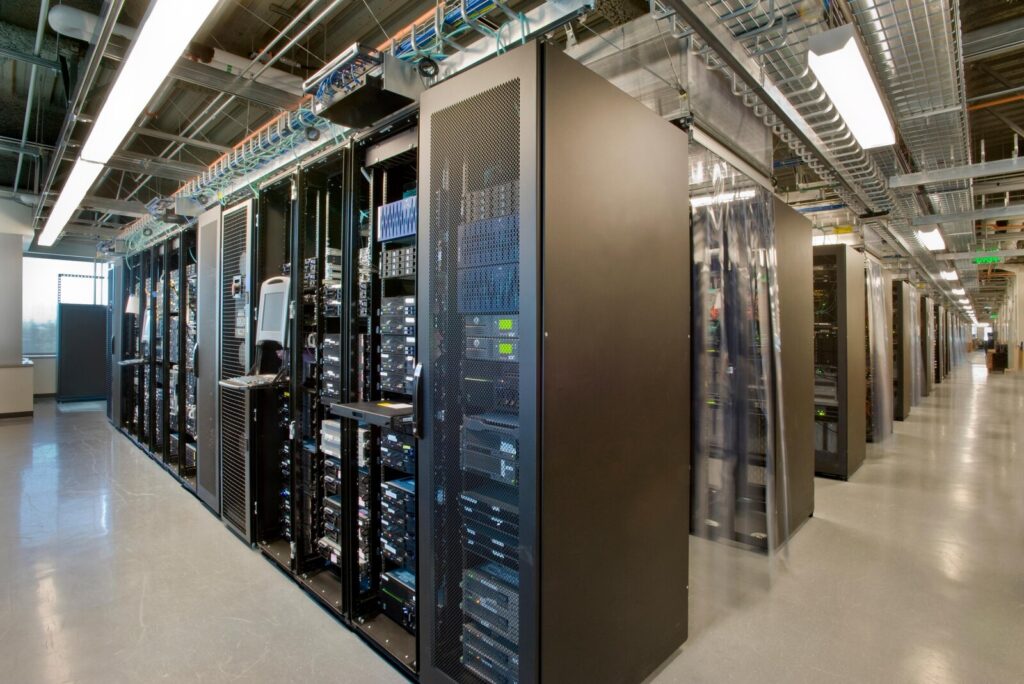
Preprint servers are now part of how science works, so they deserve the boring, careful stewardship we expect from any public utility: steady funding, independent governance, long-term preservation and honest labels about what has not yet been reviewed.
I have a practical stake in this. I build deep-learning models that use breast MRI to help tell inflammatory breast cancer apart from other locally advanced breast cancers. In AI generally, a lot of new work appears first as a preprint, so in my opinion people in fields like mine depend on preprint servers as much as biologists do.
What I would ask for
I would ask openRxiv and its funders for three things. Publish a plain account of where the money comes from each year, so the community can see whether funding is really diversifying. Commit publicly to long-term preservation of every posted preprint, in an outside archive, whatever happens to the organization. And keep the “not peer reviewed” label impossible to miss, especially on medRxiv, where readers include patients and reporters.
For readers, the ask is smaller. When you see a study in the news, check whether it is a preprint. If it is, treat it as early evidence worth watching. For researchers, the ask is to treat these servers as shared infrastructure: post there, comment there, and support the organizations that keep them running, because the alternative is discovering how much we relied on them only after one goes quiet.
References
[1] N. Fraser, L. Brierley, G. Dey, J. K. Polka, M. Pálfy, F. Nanni, et al., “The evolving role of preprints in the dissemination of COVID-19 research and their impact on the science communication landscape,” PLOS Biology, vol. 19, no. 4, Art. no. e3000959, Apr. 2021, doi: 10.1371/journal.pbio.3000959.
Related Articles